
Bases for garden rooms, cabins and sheds
Building a garden room, log cabin, summerhouse or shed? I dig out and level the ground for the base, with a 70cm-wide mini digger that fits through most garden gates. Across Cambridgeshire, Hertfordshire and Bedfordshire.
Rated Excellent on Google and Facebook.
Every garden building starts with the ground
A garden room is only as good as what it sits on. Whether it’s going on a concrete slab, paving slabs or a timber frame, the base starts the same way: turf, topsoil and roots dug out down to firm ground, and the area left level, so the base goes in square.
On a slope, that also means cutting the high side down to match the low side. By hand, that’s days of digging and barrowing. With a mini digger, most bases are dug in a day or less.
What I do
- Dig out to depth. Turf, topsoil and roots out, down to firm ground and to the depth your base needs. Your supplier or installer will usually tell you what that is, and I’m happy to advise.
- Level it. I leave the dig-out level and square, so your sub-base, slab or frame goes in true.
- Sort out a slope. On a sloping garden, I cut the high side down so the building sits level. The soil can often be used to level another part of the garden.
- Trenches for power and water. Most garden rooms need electricity, and some need water. I can dig the trench for the cable or pipe while I’m there.
Once it’s dug, I can help get the sub-base in, too. I load MOT Type 1 or crushed concrete into wheelbarrows with the digger, for you or a labourer to barrow into place, and use the digger to help put it where it needs to go. I don’t do the compacting, so you or your builder will need a plate compactor for that.
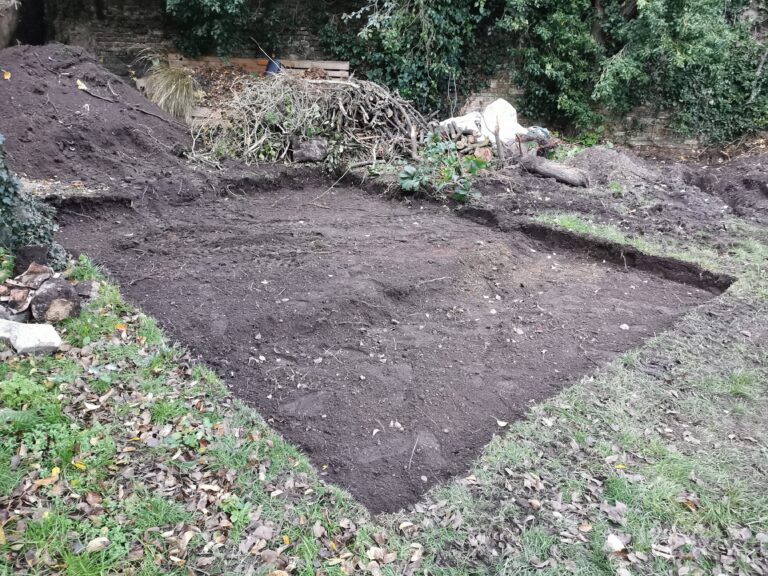
A big shed base, dug out and level
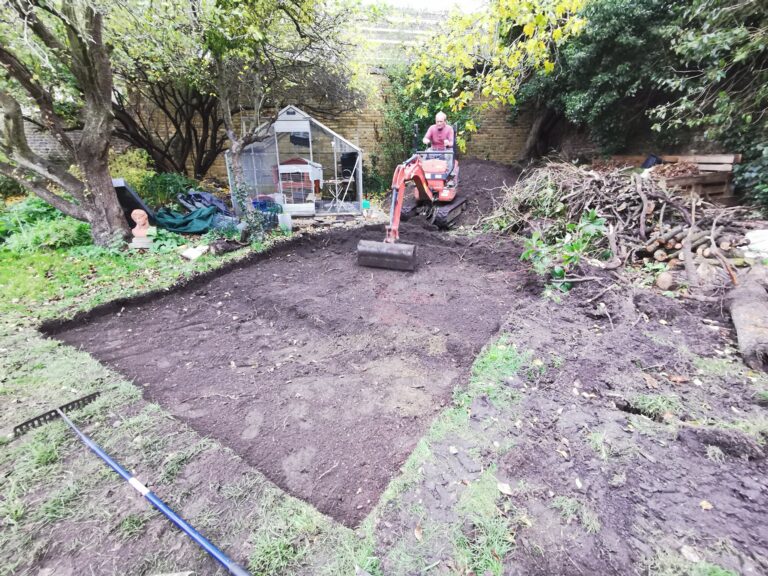
Finishing off with the mini digger
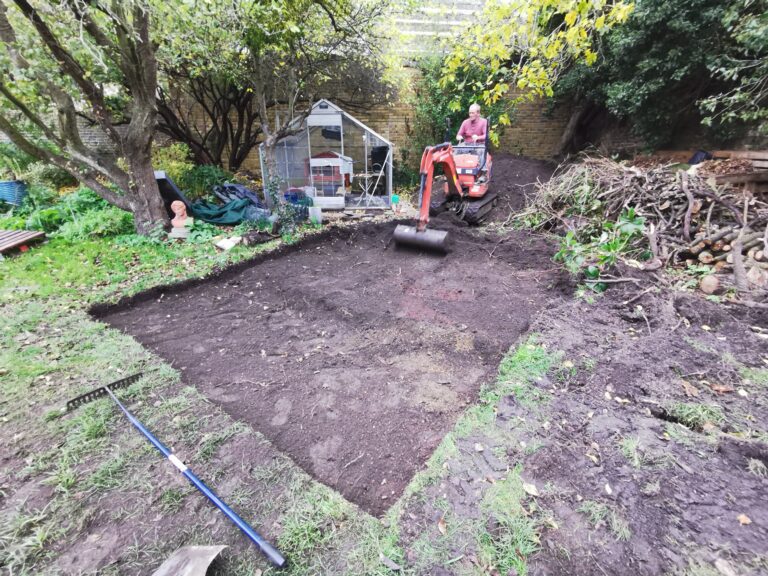
Ready for the sub-base
A shed base from a two-day job in Cambridge. See the whole job.
Ground screws or a dug base?
Some garden room companies use ground screws, which go in without any digging. If your installer is using them, you may not need me for the base at all. If you’re having a concrete slab, paving slabs or a sub-base and frame, the ground needs digging out first, and that’s where I come in.
What I dig bases for
- Garden rooms and garden offices
- Log cabins and summerhouses
- Sheds and workshops
- Greenhouses
- Patios and seating areas
Plan for the soil
Bases produce more soil than you’d think. A 4m × 5m base dug 200mm deep is 4 cubic metres of soil, and it bulks up once it’s dug. If it can’t be used elsewhere in the garden, plan on a skip, a grab lorry or bulk bags. I’m on the digger all day, so I can’t take waste away myself, but I’ll help you choose. My waste disposal page has the details.
What customers said
“Rob used his mini digger to cut through tough brambles, old shrubs and pavers… We now have a lovely clear plot ready hopefully for a lovely cabin in the spring.”
Nerys C.
“Also did base for summerhouse and extended patio, all looking great.”
Val B.
Often done alongside
- Garden levelling: the rest of the garden, levelled while I’m there
- Trenching for the power cable or water pipe
- Garden drainage: if the spot gets waterlogged, sort it before you build
- Foundations for extensions: footings for bigger buildings
Planning a garden building?
Send me photos of the spot, the size of the building and your access, and I’ll get back to you with a quote.
Garden building base FAQs
How deep does the base need to be dug?
It depends on the type of base and the ground. Your supplier’s instructions usually give a depth. If not, I’ll advise when I see your photos.
Can you help with the sub-base?
Yes. I load MOT Type 1 or crushed concrete into wheelbarrows with the digger and help get it in place, which saves hours of shovelling. Compacting it, and laying the slab, slabs or frame on top, is down to you, your builder or your installer.
Do I need planning permission for a garden room?
Many garden rooms don’t, but it depends on the size, height and where it sits in the garden. Check the Planning Portal’s guide to outbuildings before you book.
Can you dig the trench for the electrics too?
Yes. Most garden rooms need a power cable, and I can dig the trench on the same visit. Your electrician lays the cable.
Will the digger fit through my gate?
Almost certainly. The mini digger is 70cm wide, so it fits through most garden gates and side entrances. I board out lawns to protect them, too. Here’s what to expect on the day.
How do I get a quote?
Fill in the form below with photos of the spot, the size of the building and your access, and I’ll get back to you with a quote.
I cover Cambridgeshire, Hertfordshire and Bedfordshire.
Have a DIY garden project in mind?
Let's chat!
Let's chat! Get in touch to discuss your mini digger project
When you submit the form, it will redirect to a "thank you" page. If you don't see this or if you have trouble submitting the form, please WhatsApp me on 07753 911329 instead (and tell me that the form isn't working!). Thanks!


